Full Fridge but Nothing to Eat? Why It Happens and How to Fix It
Full fridge but nothing to eat? Why it happens, what to cook from it tonight, and how to shop for meals rather than ingredients so it stops.
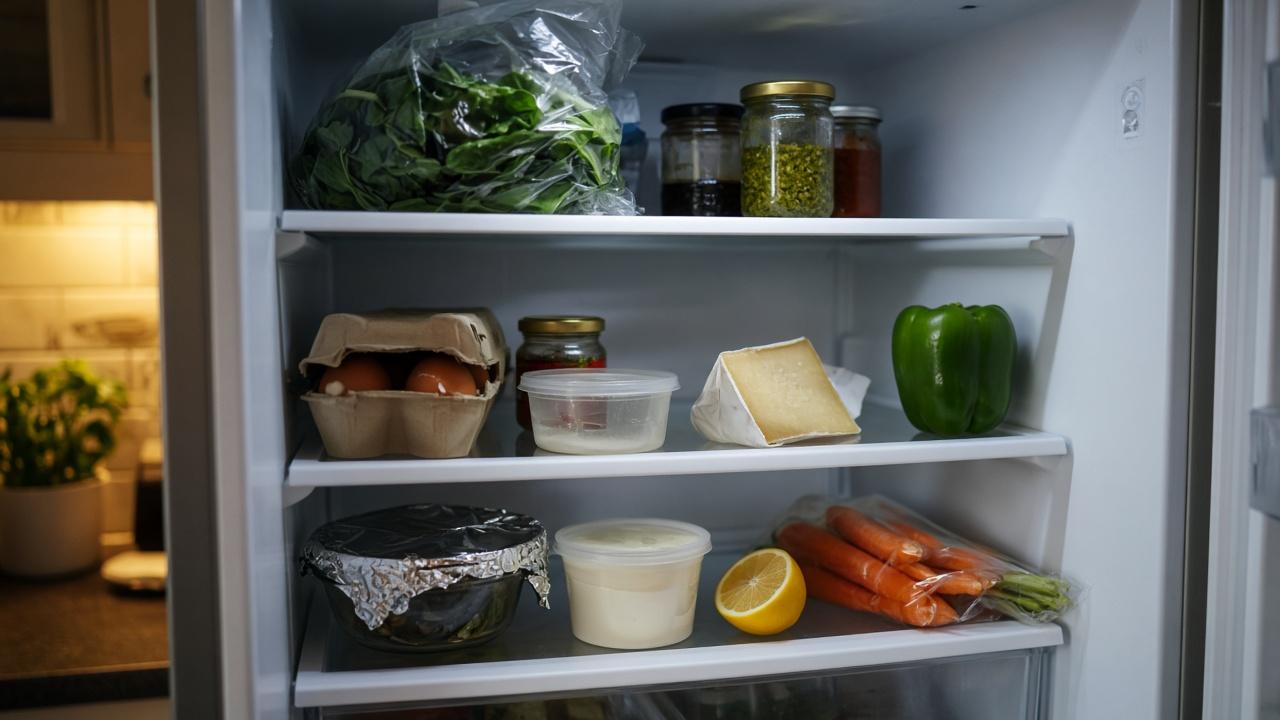
If you've ever stood in front of a full fridge and announced that there's nothing to eat, you're in very good company. It's one of the most common kitchen complaints going. There's a Reddit thread in r/Cooking that asks exactly this: does anyone else buy loads of groceries every week and still feel like there's nothing they can make? The replies run on and on, and on X people joke about it most evenings around dinner time.
The food is usually fine. The problem is that a fridge full of ingredients isn't the same as a fridge full of meals. Here's why that happens, what to do with what's in there tonight, and how I've stopped it happening every week at home.
Why does a full fridge feel like there's nothing to eat?
Because most of what's in there is bits, not dinners. Half a bag of spinach, a few eggs, the end of a block of cheese, a jar of pesto, a pepper you bought for something you never made. Each of those is perfectly good food, but none of them says 'this is tonight's dinner' on its own. Your tired brain looks at a shelf of parts and files the whole thing under empty.
There's also a decision hiding in there. To turn those parts into a meal you have to come up with an idea, check you've got the rest of it, and work out whether there's time. At 6pm, after a full day, that's a lot to ask. Saying 'there's nothing to eat' is often really saying 'I don't want to make another decision right now', which is a feeling I know well.
I've written more about that side of it in why deciding what's for dinner is harder than cooking it. The short version: the cooking is rarely the hard part.
Why does this keep happening after a big shop?
In my experience it comes down to how the shopping was done. If you walk round the supermarket buying things that look useful (a bag of salad, some chicken, a few vegetables, whatever's on offer), you come home with lots of food and no plan for it. Every ingredient was bought for a vague 'we'll use that', and vague plans don't survive a Tuesday.
A few patterns make it worse:
- Buying the same 'healthy' basics every week out of habit, whether or not you cook with them.
- Picking up ingredients for a recipe you meant to try, then forgetting which recipe it was.
- Having half the ingredients for several meals and all the ingredients for none of them.
- Leftovers in tubs at the back, out of sight and so out of mind.
None of that is a willpower problem. It's just what happens when the shopping comes before the deciding.
What can I make with what's in my fridge right now?
For tonight, the trick is to stop looking for a recipe and look for a format instead. A handful of flexible dinners will happily take whatever odds and ends you have:
- Omelette or frittata: eggs plus almost any vegetable, cheese or leftover meat.
- Fried rice or noodles: any cooked rice or a packet of noodles, frozen peas, an egg and soy sauce.
- Pasta with whatever's going: a jar of pesto, spinach wilted in at the end, and the last of the cheese.
- Soup: tired vegetables, a stock cube and twenty minutes.
- Something on toast: beans, eggs, mushrooms or cheese, and nobody has to feel bad about it.
Before you start, check the leftovers and anything close to its date first. If that tub at the back can be tonight's dinner on its own, that's one less thing to cook and one less thing to throw away. If you're not sure how long something has been in there, it's not worth the risk.
If tonight is a 'too tired to cook at all' night, I've got a separate piece on how to stop ordering takeaway when you're too tired to cook with a few no-effort fallbacks.
How do I stop having a full fridge and nothing to eat?
The fix that's worked for me is simple, though it takes a small change of habit: decide the dinners first, then shop for them. Shop for meals, not ingredients.
When every item in the fridge was bought for a specific dinner, the 'nothing to eat' feeling mostly disappears, because opening the fridge isn't a puzzle any more. The chicken is for Wednesday's fajitas. The spinach is for Thursday's pasta. You're not inventing anything at 6pm, you're just doing what you already agreed with yourself on Sunday.
You don't need to plan every night of the week for this to work. Three or four planned dinners plus a couple of easy fallback nights covers most households. What matters is that most of what you buy has a job.
Shop from the plan, and check the fridge before you go
Once the dinners are chosen, the shopping list should come from them rather than from memory. Go through each meal, write down what it needs, then do a quick fridge and cupboard check and cross off anything you've already got. That two-minute check is what stops you buying a third jar of pesto.
It also helps to plan the first meal or two of the week around whatever's already in there. If you've got half a bag of spinach and some eggs, put a frittata on Monday and buy a bit less.
I've gone through this step by step in how to build a shopping list from your meal plan, including how to keep the list tidy when the plan changes.
What if the plan falls apart halfway through the week?
It will sometimes. Someone's late home, you get invited out, or you just don't fancy what's planned. That's fine. The aim isn't a perfect week, it's having fewer nights where you open the fridge with no idea what it's for.
Two things help. First, give the busiest nights the easiest meals, so the plan survives contact with real life. Second, if a dinner gets skipped, move it to another night rather than leaving its ingredients to drift to the back of the fridge.
If this happens to you a lot, why does my meal plan fall apart by Wednesday? goes into the most common reasons and how to build a plan that bends instead of breaking.
How Foodedo helps (and what it doesn't do)
This is the habit I built Foodedo around. When you generate a meal plan, it picks the dinners for you first, based on simple behaviour like the meals you've saved, liked, used or turned down. Choosing the meals yourself is optional, so on a week when you can't face deciding, you can start from a suggested plan and swap out anything you don't fancy.
The shopping list is linked to the plan, so it's built from the dinners you've actually chosen, and it updates if you swap a meal. That's the 'shop for meals, not ingredients' idea without having to write it all out by hand. You can also import the recipes you already cook from a link or by pasting the recipe text in, so the plan is made of food you know you like. Some recipe sites won't import, but pasting the text works when that happens.
To be clear about what it doesn't do: Foodedo doesn't track your pantry or know what's in your fridge. You still need that quick look before you shop, and you'll still want to plan a meal or two around anything that needs using up. I'd rather be upfront about that than pretend an app can see inside your kitchen.
A simple way to start this week
- Tonight, pick a format (omelette, fried rice, pasta, soup) and use up whatever's already in there.
- Before your next shop, choose three or four dinners, starting with anything that uses what you've already got.
- Write the shopping list from those dinners, then check the fridge and cupboards and cross off what you have.
- Leave a couple of nights for leftovers or something easy.
Next time you open the fridge, most of what's in there will already have a dinner attached to it. That's usually all it takes for 'there's nothing to eat' to become 'oh right, it's the fajitas tonight'.