How to Stop Ordering Takeaway When You're Too Tired to Cook
How to stop ordering takeaway when you're too tired to cook: decide dinner before 6pm, shop from the plan and keep easy fallback meals.
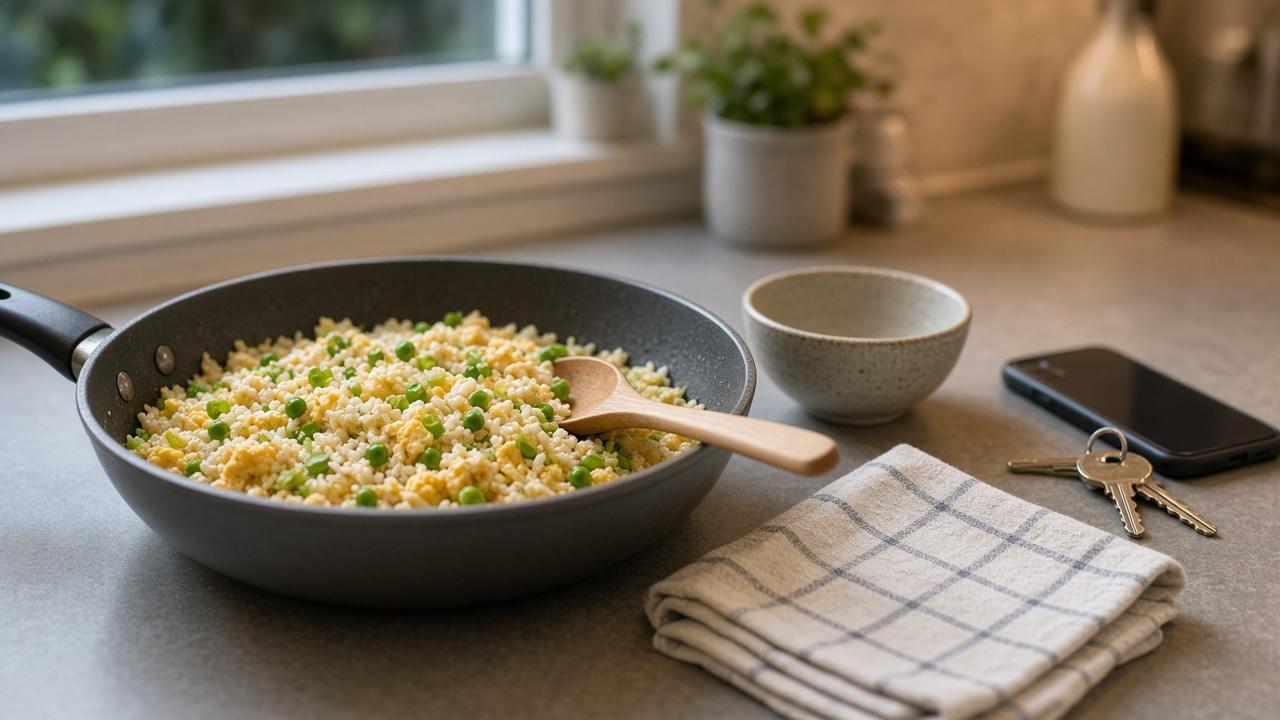
If you're trying to work out how to stop ordering takeaway when you're too tired to cook, it helps to notice what's actually happening at 6pm. Most of the time it isn't the cooking that beats you. It's the deciding. You open the fridge, nothing obvious jumps out, you'd have to think about what goes with what, and the delivery app is right there with no decisions left to make except which pizza.
That's a pattern I recognise in myself, and it comes up again and again on Reddit, in threads like 'how do I stop ordering takeout?' and 'how do you cook at home when you're mentally exhausted after work?'. The people asking can usually cook. What they're missing is an answer to 'what's for dinner?' that's ready before they're tired.
Here's what I've found genuinely helps, without needing more willpower or a Sunday spent batch cooking.
Why do I keep ordering takeaway when I have food in the house?
Because food in the house isn't the same as a dinner. A fridge with chicken, half a pepper and some yoghurt needs a plan before it becomes a meal, and making that plan is the hardest part when you've used up your concentration at work. The takeaway removes every step at once: no deciding, no checking ingredients, no washing up.
Deciding is the bit people underestimate. Every evening you're weighing up what you fancy, what's in, what's quick and what everyone else will eat. I wrote more about that in why deciding what's for dinner is harder than cooking it. Once you see takeaway as the easy way out of a decision, rather than a lack of discipline, the fixes become more obvious.
Decide dinner before you're tired
The single biggest change is moving the decision to a time when you've got energy for it. If tonight's dinner is already chosen in the morning, or better still at the weekend, the 6pm question has an answer before you've even walked through the door.
It doesn't need to be elaborate. Even a note saying 'Tuesday: sausage pasta' does most of the work, because the alternative to a takeaway is no longer 'think of something', it's 'make the thing I already said I'd make'. You've turned an open question into a yes-or-no one.
If a full week feels like too much, start with your two hardest nights. For most people that's the longest workday and the evening with activities or a late finish. Plan those, and leave the others loose.
Make sure the ingredients are actually there
A plan only stops a takeaway if you can cook it. One of the most common reasons plans collapse is getting home and finding you never bought the one thing the recipe needed. At that point ordering in feels completely reasonable.
So build the shopping list from the dinners you've chosen, not from memory. It sounds obvious, but a list built from the plan is what makes the plan cookable. There's a step-by-step approach in how to build a shopping list from your meal plan.
Keep a few 'too tired to cook' dinners in reserve
Some nights you'll be wiped out regardless of how organised you were. Rather than pretending those nights won't happen, plan for them. A couple of genuinely low-effort meals that use things with a long shelf life give you an option that's almost as easy as ordering:
- Egg fried rice with frozen peas, using a pouch of microwave rice.
- Pasta with a jar of pesto, frozen spinach and whatever cheese is in the fridge.
- Beans on toast with a fried egg, or a jacket potato with beans and cheese.
- Something from the freezer that you cooked in a bigger batch on a better night.
The point isn't that these are exciting. It's that they're always available and need no thinking. When the choice is between a takeaway and a fifteen-minute meal you don't have to plan, the meal wins far more often.
Plan fewer dinners than you think you need
If you plan seven ambitious meals and life gets in the way on Tuesday, the whole week starts to feel like a failure, and that's often when the takeaways creep back in. Planning four or five dinners, with a leftovers night and one of your reserve meals, gives the week some slack.
I've written about this in more detail in why does my meal plan fall apart by Wednesday. The short version: a plan that expects bad days survives them.
It's also fine to plan a takeaway. If Friday is pizza night, put it in. A takeaway you chose on purpose isn't the problem. The problem is the one you order three nights a week because nothing else was decided.
Use the meals you already know you'll eat
When you're trying to cook more at home, it's tempting to fill the plan with new recipes. New recipes are slower, need unfamiliar ingredients and carry the risk that nobody likes them, all of which make a takeaway more tempting. Lean mostly on dinners you already make well, and add a new one occasionally on a calmer night.
A small, reliable rotation is ideal for this. If you're not sure how big yours should be, how many meals should be in a dinner rotation covers it.
How Foodedo helps with the 'what's for dinner?' moment
I built Foodedo because the deciding was the part I kept failing at, and takeaways were usually what filled the gap. So it works the other way round from most meal planners: when you generate a plan, it picks the dinners for you first, based on simple behaviour such as the meals you've saved, liked, used or turned down. Choosing meals yourself is optional.
That means the decision gets made in a couple of minutes at a time that suits you, rather than at 6pm when you're tired. If one dinner doesn't suit, you can swap it rather than starting again.
The shopping list comes from the plan and stays linked to it, which helps with the 'I didn't buy the thing' problem. Foodedo doesn't track your pantry, so you'll still want a quick look in the cupboards before you shop. You can also add recipes you already cook by importing them from a link or pasting the text in, so your reliable meals can turn up in a plan. Some recipe sites won't import, in which case pasting the text works instead.
What to do on the night you nearly order
Even with a plan, there'll be evenings when your thumb hovers over the app. A few things that help in that moment:
- Look at what's planned for tonight, not at the fridge. The plan has already answered the question.
- If the planned meal feels like too much, swap it for one of your reserve dinners rather than abandoning cooking altogether.
- Give yourself a five-minute start: put the pan on or the oven on. Starting is usually the hardest bit.
- If you do order, don't write the week off. Move tonight's planned meal to tomorrow so the ingredients still get used.
A simple way to start this week
- Pick your two hardest nights and decide those dinners now.
- Build a short shopping list from just those meals, plus one or two reserve dinners.
- Keep the rest of the week loose, and plan a takeaway if you want one.
- Next week, plan one more night than you did this week.
You won't stop ordering takeaway by trying harder at 6pm. You stop by making sure that, by 6pm, there's nothing left to decide.