Why Does My Meal Plan Fall Apart by Wednesday? (And How to Fix It)
Why does my meal plan fall apart by Wednesday? Usually it's built for a perfect week. Here's how to plan for a real one and keep it going.
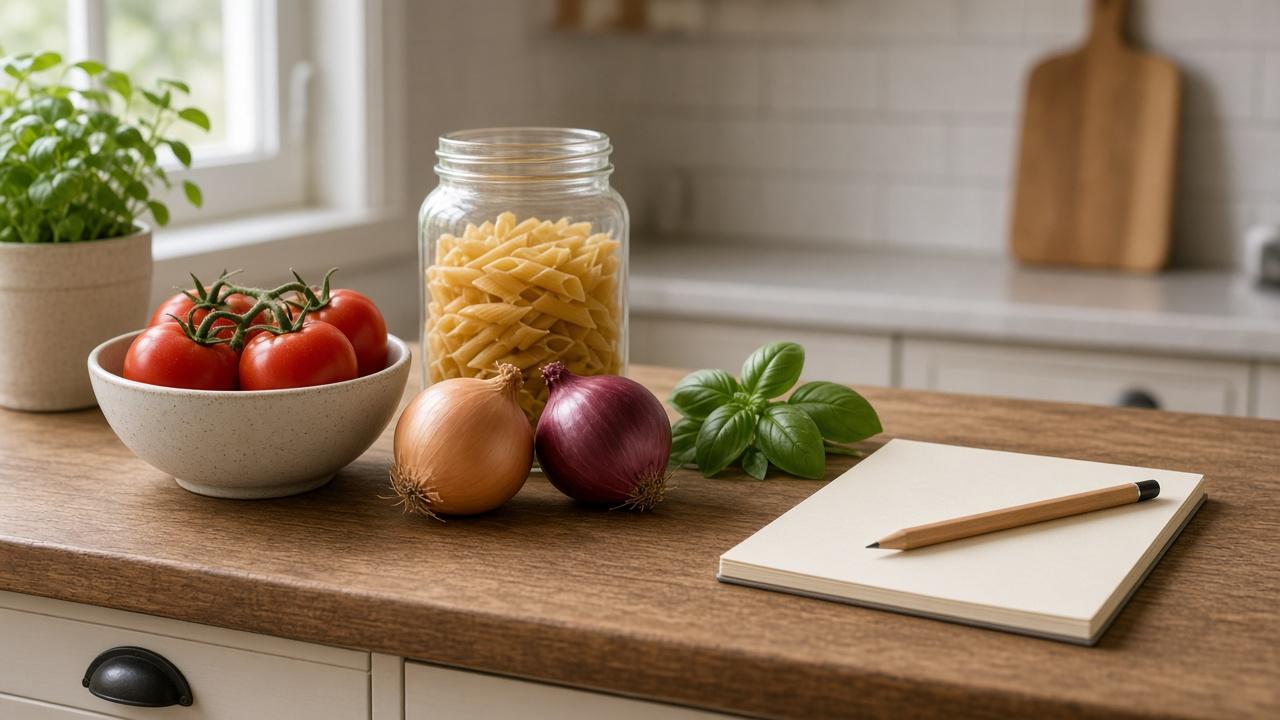
Why does my meal plan fall apart by Wednesday? Usually because the plan was written for an ideal week and you're living a real one. Monday goes to plan. By Wednesday you're tired, one dinner doesn't appeal any more, something ran late, and the food you bought for tonight is now a problem rather than a plan.
It's a common complaint, and it usually goes like this: at least one person in the house doesn't fancy what's scheduled for that date, and by half six it's a scramble that ends in a takeaway. That's not a discipline problem. It's a design problem.
I've built and rebuilt my own planning habits while making Foodedo, and the same few causes keep turning up. Here they are, with fixes that don't require a better personality.
Why meal plans collapse midweek
- The plan assumed seven cooked dinners. Nobody cooks seven. There's a leftovers night, a late night, an invitation, a night you simply can't face it.
- Meals were tied to dates. On Sunday, Wednesday's traybake looked fine. On Wednesday at 6pm it's an assignment you didn't choose that day.
- The week was too ambitious. Three new recipes and a long cook is a lot to ask of the same person who has just finished work.
- One dinner broke and took the whole plan with it. Once a night slips, many people treat the whole week as failed and stop.
- The shopping didn't match the week. Food bought for meals that never happened sits there looking guilty, which makes the next plan harder to start.
Some of this is just decision fatigue arriving at the worst moment, which I wrote about in why deciding what's for dinner is harder than cooking it. The plan only helps if the evening decision is smaller than it would have been without one.
Plan fewer dinners than you think you need
If your plan has seven cooked dinners, it has built-in failure. Try planning four or five and treating the rest as slack: leftovers, something from the freezer, eggs on toast, a takeaway you've decided on rather than fallen into.
If you're not sure how many different dinners you need, how many meals should be in a dinner rotation works through it.
Slack isn't laziness. A plan with room in it can absorb a bad night. A plan with none turns every bad night into proof that planning doesn't work.
Keep a fallback you actually like
Have one or two dinners that take twenty minutes and use things you always have: pasta with something, egg fried rice, beans and a baked potato. The point is that when Wednesday goes sideways, you swap one dinner for the fallback rather than abandoning the plan.
This only works if the fallback is something you'd happily eat. If it feels like punishment, you'll order food instead.
Treat the plan as a shortlist, not a timetable
Another useful shift: decide what you're cooking this week, but not necessarily which day. Four dinners are chosen and bought for; each evening you pick whichever suits how tired you are. Quick one on the bad day, the longer one when you've got energy.
Even if you do assign days, give yourself permission to move things around. The meals are the plan; the calendar is a suggestion.
Swap one meal, don't restart the week
When a night falls apart, the cheapest repair is a single swap. Move the meal you didn't cook to tomorrow, or drop it for the fallback, and carry on. Bin the guilt with it.
If you're still building the habit, how to start meal planning without it taking over your week covers the basics of keeping it small enough to survive.
Check who you're planning for
Often part of the problem is that someone in the house didn't want what was on the plan. That's worth taking seriously. A plan nobody else has seen is a plan one person has to defend every evening.
Letting the people you feed see the week, and having a say in a couple of dinners, removes a lot of Wednesday friction. Choose meals people actually eat, not meals you think you ought to cook.
Match the meal to the night
Most Wednesday failures are really energy mismatches. A forty-five minute cook that looked cheerful on Sunday is hopeless at 6pm after a long day. Before you lock the week in, glance at your diary and put it against the plan. Late finish on Tuesday? That's a fifteen-minute meal or leftovers. Free evening on Thursday? That's when the slow braise or the new recipe goes.
Plan your leftovers on purpose
Leftovers are the most underrated part of a plan that survives. If you cook a big pot of chilli on Monday, Tuesday's lunch and possibly Wednesday's dinner are already sorted, and you've bought one set of ingredients instead of two. The trick is to write leftovers into the plan rather than hoping they'll happen. Otherwise they get forgotten at the back of the fridge and you cook something else anyway.
Shop for the week you'll actually have
A shopping list built from seven ambitious dinners will always disappoint you. Build the list from the four or five you've committed to, then add staples for your fallback. If you do end up with a spare ingredient, make it the centre of the next plan rather than a reproach.
I go into the mechanics of this in how to build a shopping list from your meal plan. And if you're planning with a partner or housemates, meal planning as a couple or household is about sharing the load so it isn't all on one person.
Do a two-minute Wednesday check
Rather than waiting until you're hungry and defeated, take two minutes on Tuesday evening to look at Wednesday and Thursday. Is tomorrow's meal still realistic? Do you have what you need? If not, swap it now, while it costs you nothing. A quick look ahead turns a Wednesday crisis into a Tuesday tweak.
Where Foodedo fits in
I built Foodedo around exactly this failure mode, so here's what it does, and what it doesn't.
You can make a plan for anywhere from three to seven days, with servings set for your household, and you can start without signing in. When you generate a plan, Foodedo picks dinners for you using the recipes you've saved, aiming for variety and taking your recent plans into account, so you're not eating the same thing every week.
When Wednesday falls apart, you can swap just that one meal, or look at alternative plans, and undo if you change your mind. The shopping list is linked to the plan: you can tick things off, add extras, remove and restore items, and it updates when you swap a meal, so you're less likely to be left with food for a dinner that never happened.
If you share a household, a single-use invite link lets someone else see the same week and shopping list. When you're ready to cook, Cook mode is there for the cooking itself. And if you want a quick dinner, the Recipes page has search and filters for under 30 minutes, budget and protein.
Honest limit: it won't stop you being tired on a Wednesday. It's free, with no subscription; sign-up is a modal on the site, so start from the homepage.
A plan that survives a real week
- Plan four or five dinners, not seven.
- Keep one or two fast fallbacks you like.
- Treat days as flexible; the meals are the commitment.
- When a night fails, swap one meal rather than restarting.
- Make sure the people eating have seen the plan.
A good meal plan isn't one that goes perfectly. It's one that's still useful on Thursday, after Wednesday has gone wrong.