What to Do When Your Partner Always Says 'I Don't Mind' About Dinner
Partner always says 'I don't mind' about dinner? How to stop being the one who decides every night, without turning it into a row.
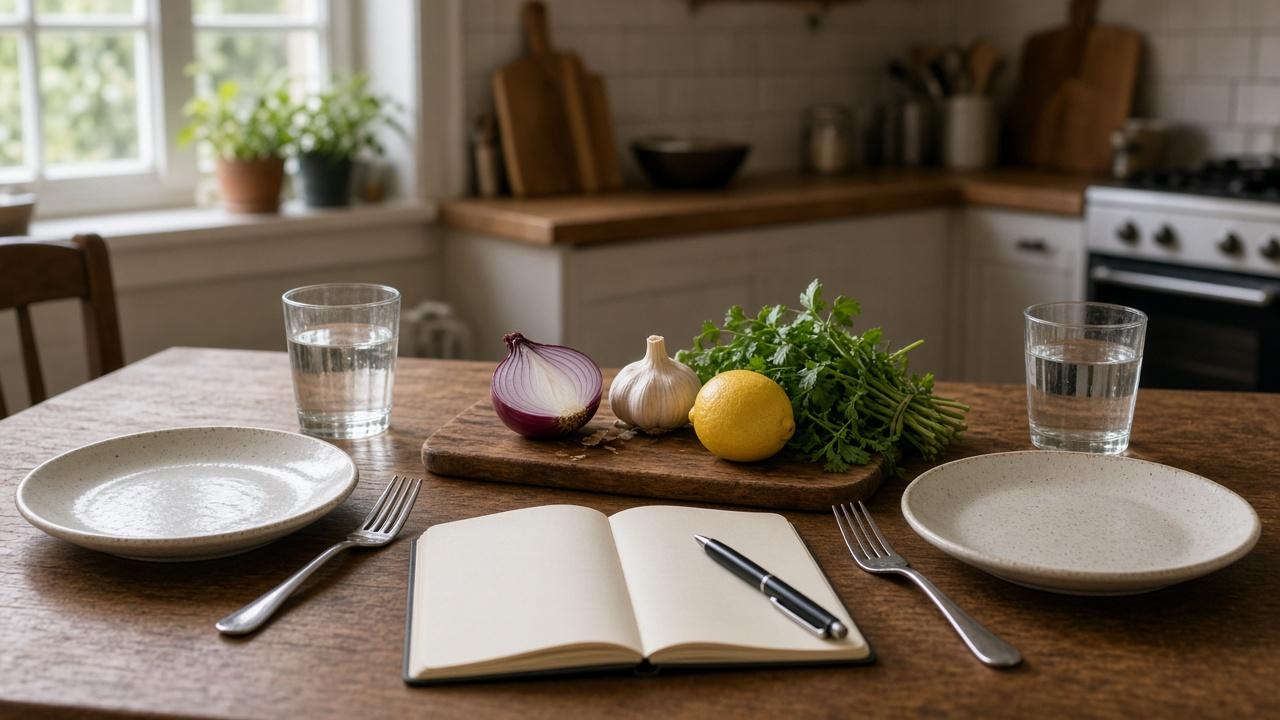
If your partner always says 'I don't mind' when you ask what's for dinner, you're not being fussy for finding it exhausting. 'I don't mind' sounds generous, but it hands the whole decision back to you, every single night. And when the meal you pick then gets a lukewarm reaction, it can feel like you're doing the hard part with none of the credit.
This comes up constantly on Reddit. There are long threads in relationship and cooking communities with titles along the lines of 'I hate deciding on dinner' and 'the classic I dunno for dinner', and the story is nearly always the same: one person ends up as the household's permanent dinner decider, and they're worn out by it. I've been on both sides of that conversation at home, and it's a big part of why I built Foodedo.
Here's what I've found actually helps, without turning dinner into a negotiation.
Why does 'I don't mind' feel so annoying?
Because the hard bit of dinner usually isn't the cooking. It's the deciding: weighing up what's in, what's quick, what you had recently and what everyone will actually eat. I've written about that in why deciding what's for dinner is harder than cooking it. When someone says 'I don't mind', they're often genuinely trying to be easy-going. But the effect is that all of that weighing-up lands on one person.
There's a second sting, too. 'I don't mind' is rarely completely true. Most people do mind a bit. They just don't know what they want until they hear what they don't want. So you suggest something, they hesitate, and you're back to square one with one fewer idea.
Is it normal for one person to always decide dinner?
Very. In most households one person drifts into being the default planner, often because they cook more or care more about the food shopping. It isn't a sign anything is wrong with the relationship. It's just a job that nobody formally agreed to, so it falls to whoever notices it first.
The trouble is that a job nobody agreed to is also a job nobody thanks you for. Naming it as a real task, rather than a nightly question, is usually the first step to sharing it.
Swap open questions for small choices
'What do you want for dinner?' is one of the hardest questions you can ask a tired person. There are hundreds of possible answers and no starting point. 'Pasta bake or fajitas?' is far easier. Most people who say 'I don't mind' to the first question will happily pick between two options.
A few versions that work well:
- Offer two options and ask them to choose. Either is fine with you, so you can't lose.
- Ask what they definitely don't want tonight. Ruling things out is easier than picking.
- Ask them to pick the night instead of the meal: 'Which day this week do you want the curry?'
None of these require your partner to suddenly become a keen meal planner. They just lower the effort of joining in to almost nothing.
Decide once a week, not every night
The nightly question is where most of the friction lives. If dinner is decided one evening a time, there are seven chances a week for 'I don't mind' to land on you. Decide the week in one go, ideally together and ideally when neither of you is hungry, and there's only one conversation to have.
It doesn't need to take long. Ten minutes on a Sunday with a list of meals you both like is plenty. Each person picks a couple of dinners, you fill the gaps with reliable favourites, and the rest of the week runs itself. If anyone says 'I don't mind' at this stage, that's fine: they've just agreed to whatever ends up on the list.
If you want a longer look at splitting the work between two people, I've covered planning, shopping and cooking in meal planning as a couple or household. This piece is really about the decision itself.
Build a list of meals you both actually like
A shared list of 'meals we're both happy with' takes a surprising amount of pressure off. When you're stuck, you're no longer inventing something from nothing. You're picking from food you already know will go down well, so the 'I don't mind' reply stops being a problem, because everything on the list is something they've already said yes to.
Start with whatever you already cook regularly and ask your partner to add two or three things they'd like more often. Ten to fifteen dinners is a good size for most couples. I've gone into how many you really need in how many meals should be in a dinner rotation.
Give the 'I don't mind' person a different job
Some people really don't have strong views about food, and that's fine. Pushing them to care about menus usually goes nowhere. It's often fairer to swap roles: one of you decides, the other does the shop, or cooks on certain nights, or handles the washing up without being asked.
The aim isn't that both people decide equally. It's that the person who decides isn't also doing everything else, and that the deciding is recognised as work.
Let something else make the first pick
This is the bit I built Foodedo for. When you generate a plan, it picks the dinners for you first, based on simple behaviour such as the meals you've saved, liked, used or turned down. Choosing meals yourself is optional. So instead of one person staring at a blank week, you both start from a suggested plan and react to it, which is exactly the kind of choice 'I don't mind' people are good at.
If one of you isn't keen on a dinner, you can swap it rather than starting again. You can also invite your partner into your household with a link, so you both see the same week and the same shopping list, and the list stays linked to the plan. It doesn't track what's in your cupboards, so a quick look before you shop is still worth doing.
You can add the dinners you already cook by importing them from a link or pasting the recipe text in, so your shared favourites can turn up in a plan. Some recipe sites won't import, but pasting the text works when that happens.
What to say tonight when you hear 'I don't mind'
For the evenings when nothing is planned and the question comes up anyway, a few replies that keep things friendly:
- 'Great, then can you pick between these two?' and name two things you could make.
- 'Fine by me. You choose tonight, I'll choose tomorrow.'
- 'Let's put three dinners on the list for this week now, so we don't have to do this again tomorrow.'
Said lightly, none of these feel like a row. They just make it clear that the decision is a shared job, not a favour.
A simple way to start this week
- Tell your partner you'd like to stop being the default dinner decider. Keep it short and practical.
- Agree a list of ten or so meals you're both happy with.
- Spend ten minutes choosing this week's dinners together, two options at a time if that's easier.
- Build the shopping list from those meals, and let whoever doesn't decide take on the shop or a couple of cooking nights.
'I don't mind' will probably never disappear completely. But once dinner is decided for the week, it stops being a question you have to answer alone at 6pm.